
During my first year of studies at DID I realized how many things I learned and how many things that I still need to learn before arriving or at least being a little bit closer to the level of the people that made the history of Graphic Design. When I started this year, my idea of Graphic Design was “I will be learning how to use Illustrator and Photoshop and will start creating my own things”. My idea of Graphic Design was very much limited only to the technical skills required for this profession, without having any clear idea of it. In fact, with this in mind, I have always tried to learned graphic design tools by my own, following tutorials on the Internet.
By attending the lectures day by day, I discovered that there is a whole world that stands under the word “Graphic Design” and how this changed over the years. I learned how to generate creative ideas before arriving to the actual development of it, and the final piece it is not necessarily required to be done through computer graphic tools, it can be drawn, crafted, painted etc…I discovered there are different number of professions that exists in this field, some of which I feel close to what I like doing some of which I don’t. I have always had interest in Illustration and photography, but I discovered to have interest in Typography as well. I didn’t know you could build a profession as typographer.
By following my interest I started making some research on these professions and reporting the skills required to pursue a career path in one of these:
Typographer
A typographer is person that create a typeface that reflects the message that is intended to be communicated.
The skills required for this field consists in learning the fundamentals and history of typefaces as well as having a distinctive design skills.
The main career opportunities for typographers are found in publishing companies, advertising agencies and printing establishments. For example Book publishers call the typographer to create a design for book covers and book promotional materials. Visual effects plays an important role in product branding.
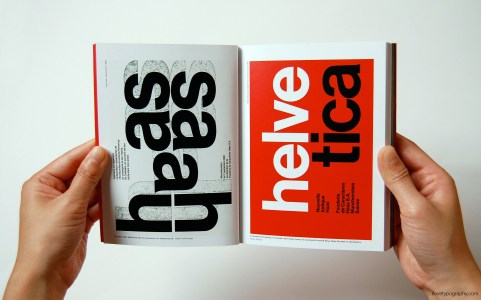
I have interest in typefaces that are clean and readable such as Helvetica inspired by the Swiss typography.
Illustrator
An illustrator is a person who specializes in enhancing writing or elucidating concepts by providing a visual representation that corresponds to the content of the associated text or idea. The illustration may be intended to clarify complicated concepts or objects that are difficult to describe textually. There are different types of illustrators and their work depends on the field they work in. There are children’s book illustrators, medical illustrators, scientific illustrators, technical illustrators and others. There are several different skills required for this profession:
- good drawing skills and IT skills;
- an eye for detail and design;
- to be good at communicating and negotiating with clients and colleagues;
- self-promotional skills.
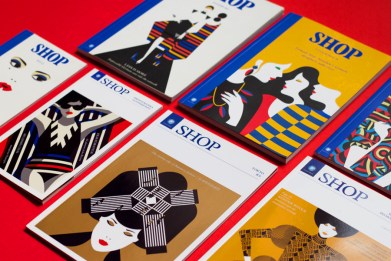
One of my favourite Illustrator is Malika Favre, she is a French artist based in London. Her work are characterized by the use of: bold colours, minimal style, positive negative space.
Photographer
Photographers create photographic or digitally manipulated images to illustrate the subject matter of publications. They may also source images, so need a working knowledge of what constitutes a good image.
Being a photographer requires the following qualities and skills:
- Artistic;
- Good communicator;
- Enjoys working with people;
- Outgoing;
- Observant;
- Business skills;
- Creative;
I have always loved amateur photography and wouldn’t mind combining the love of photography with on of the profession above, such as the use of text on a edited photograph to convey a particular message and create a poster etc.
Typography Evolution
All of the different careers listed above have evolved over time, if think of a typography there are a variety of printing techniques that designers can use to solve problems and create visual materials. Some are older than others, some are not as easily available as they used to be. Wood Block printing is one of the oldest techniques for printing and has a long history or development in both Europe and Asia.
Graphic designers these days have an endless number of tools and modern technology to create a wide range of typographic styles and even entire families of font families and typefaces. By having the knowledge of typographic history, graphic designers can expand their horizons and enhance their skills to produce a much more refined body of work. From ancient typographic styles to classic movable type, the history of typography can help designers develop more cohesive style that builds on the past. There is so much to learn from the past, and so much inspiration to be discovered.
Professional Development Plan
Self skills audit
By nature I am person that never stops in front of things that has to deal with for the very first time. This is something that I always dealt with in all of my jobs, sometimes you are assigned to projects for which you don’t have enough experience and skills, but I see those things as opportunity to learn something new that adds value to your personal and professional development. I consider my self to be a very versatile person, with good technical skills, related to digital tools since I have always been very keen towards the world of computer science and internet. Even if I don’t have any professional experience in Graphic design, some of the professional skills acquired through my jobs can still be applied to this sector as well: organization, time management, research. In addition to this, skills acquired at this first year at DID to pursue a career in the Graphic design are: exploring ideas or ideas generation, creativity, project management, presentation, team work, brainstorming.
By looking at the different professions that I am interested in, I started doing a SWOT analysis of what are my current Strengths, Weaknesses and skills that I need to improve.
- Organization;
- Dedication;
- Time management;
- Using basic Photoshop and Illustrator;
- Collaboration;
- Cooperation;
- Idea exchange;
- Curiosity;
- Versatility;
- Optimism;
- Analysis;
- Self-motivation;
- Initiative;
- Persistence;
- Mind mapping;
- Experimenting;
- Commitment;
- Teamwork;
- Responsibility;
- Patience;
- Empathy;
- Lack of knowledge of the Graphic design sector;
- Lack of knowledge of different Graphic design techniques;
- No connection with the graphic design history;
- Volunteering in industry bodies;
- Networking attending workshops;
- Develop some self-promotional skills;
- Create some own small projects for the portfolio;
- I procrastinate things that could be done in a very small time;
- Be a good communicator;
I created a short terms 6 weeks plan in relation to the assignments and personal goals that I wanted to achieve:
- Setup of the Blog and make a post a week;
- Follow tutorials on the internet for WordPress learning;
- Read the “Graphic Design” history assignment ahead the class and make a further research on a topic of interest;
- Review the blog post after in class discussion;
- Research on the professions of interest
- Research – Influence of propaganda poster in the political commentary
- Partecipate more in class discussion with the aim of improving my communication skills
- Buy a book on Graphic Design history to improve my personal knowledge
Week 1 – I set up my personal Blog on WordPress. Even if I had a previous experience with WordPress this version was different from the one that I used to. This made me realized that you need to keep yourself updated with the latest technologies if you are planning to have an online portfolio or using digital tools in your work.
Week 2 – I started making my first posts on the Blog. In class we discussed about the Russian Constructivism and we were split into groups and asked to develop a Poster on the basis of the article that were assigned. Aine and I started with some brainstorming and created a first sketch draft in class and then we finished the piece at home. The brainstorming phase and the communication between me and Aine worked well since both of us were listening to each other ideas and satisfied of the final poster, it was as we wanted it to be.
Week 3 – In class we discussed about the Bauhaus era, we were split into groups I worked with Louise and both of us contributed in the discussion with our personal research as well. I realized that I feel more comfortable in discussing things that I know well. I started making the research on the report that I needed to complete for the Unit 2 assignment. I picked the “Influence of propaganda poster in the political commentary – Brexit”. I made a lot of research by looking at different articles of that period, I searched for different source for images. I wanted my article to be sustained by reliable data and sources, I felt this last part to be a bit difficult to find.
Week 4 – I missed the class in this week but I read the assignment and published my post. I followed more tutorial for WordPress in order to be able to set up the features that I wanted in my articles (such as the labeling of images, adding of references) As per my 6 weeks planning, ordered the book on the Graphic Design history that goes from 1960s to current years, since I want to achieve a better knowledge of different styles from which I can also take inspiration.
Week 5 – After the feedback from in class session from the teacher on my posts, I reviewed some of the articles.
I put some long term goals such as the development of at least 2 projects to put in my e-portfolio in the coming 3 months; finish the typeface that I started of one of assignment in Term 2 by the end of the year. Attending workshops,
Week 6 –
References
 Gurjeet e-Portfolio