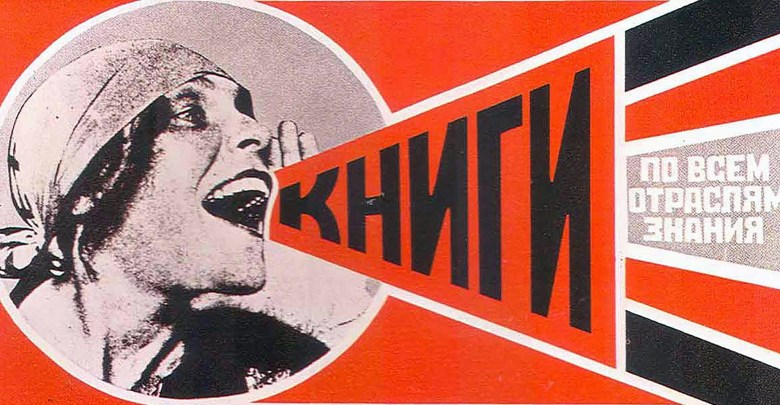
The 20th century is characterized by the birth of multiple modern art movements such as: Avant Garde, De Stijl, DaDa in Europe and Constructivism in Russia.
Most or the artists and designers of this period start taking their distance from the traditional forms of art and embrace new modes of thinking, creating and living. They share this common rejection for war and European and american capitalism. They reject the representational art, the art that is purely for aesthetic pleasure. They believe in the creation of a new original visual language.
Avant Garde
The most influential artists of the this movement are Pablo Picasso and Gerog Braque. Pablo Picasso’s painting Les Madmoiselle D’Avignon represents a turning point from traditional composition and perspective of painting. Figurative painting composed of flat, fractured planes and faces inspired by the african masks.
De Stijl
The Stijl, known also as neoplasticism, is a dutch movement founded by Piet Mondrian and Theo Van Deosbourg in 1917 in the Netherlands. The aim of the movement was to create a universal style in architecture, paintings and design. Functionalism and simplicity are the main elements of this movement, characterized by the use geometric shapes, straight lines, primary colours with use of black, white and grey only, use of positive and negative spaces.
DaDa
Dada or Dadaism it is european avant-garde movement that started in the 20th century. Developed in reaction to World War I, the Dada movement consisted of artists who rejected the logic, reason, and aestheticism of modern capitalist society, instead expressing nonsense, irrationality, and anti-bourgeois protest in their works. (wikipedia) The explosion of photographic images in the mass media in the year of the wars, stimulated artist’s experimentation with montage and collage.
The main exponents of the this movement are Kurt Schwitters famous for is collages and known also as the father of collage.
Raoul Hausmann was the founding member of the Dada movement in Berlin. He was one of the pioneers of photomontage and use this as tool for political protest.
Hanna Hoch was a German Dada artist, famous for her photomontage and through her work she touched issues related to gender, politics and androgyny.
John Heartfield famous for his photomontage, he cut and pasted together parts of different photographs to recreate new compositions, often satirizing Hitler and Nazy party.
Constructivism
Constructivism starts in Russia around 1913, by a group of artists and architects influenced by cubism. It conjoins together different fields of painting, sculpture and kinetics with machine production, architecture and applied arts. It is movement that put the art to work in the service of the nation. In 1920, the movement writes its first “Realist Manifesto” in which outlines the goals of the movement (one of which was “construct art”) they show their enthusiasm for machines, technology, industrialism and modern industrial material. They do not believe the abstract ideas, they try to link art with concrete and tangible ideas. Stylistically speaking the movement is characterized by use of:
- geometrical elements;
- typography, they use san serif typefaces in their work;
- flat, symbolic colours (red, black etc..)
- white spaces;
- Photography and photomontage.
The most influential artists of this movement were:
El Lissitizky, Alexander Rodchenko, Varvara Stepanova, Gustav Kutisis,Valentina Kulagina and Stenberg Brothers.
El Lissitzkey most of the innovative artists among the constructivists. He worked using different media painting, graphic design, photography and architecture.
Alexander Rodchenko believed in the introduction of art in everyday life. As Lissitzky he worked in different media such as painting, sculpture, graphic design, photography and montage.
Varvara Stepanova she was a Russian avant-garde artist, painter, photographer and designer, dedicating large part of her life to affecting social change (she created posters, set design, costume and books). She uses her art with the purpose of making the change in the society.
Gustav Klutsis, was an art teacher, photographer and graphic artist. He is considered to be one of the pioneers of the photomontage. He worked for Stalin with her wife Valentina Kulagina whose work is characterized by a mixture of techniques that goes from lytography, photomontage, typography and painting.
Stenberg Brothers are famous for their movie posters for the Russian cinema, they developed a special hand technique to increase the image poster size since the mechanical engagement was not available in that period. They used contrasting colours and unusual colours to create a dramatic impact.
Contemporary
Jim Fitzpatrick, is an Irish artist that is mostly known for his Celtic illustrations and Thin Lizzy work.
Shepard Fairey, is a graphic designer, illustrator, street artist and activist.
CONSTRUCTIVISM TODAY
One legacy is the popularity of the Constructivist style, which was reinvented by Saul Bass’s in 1950s titles for “Vertigo,” “Psycho” and other Alfred Hitchcock movies to Barney Bubbles’s 1970s artwork for Stiff Records and the current Saks campaign.
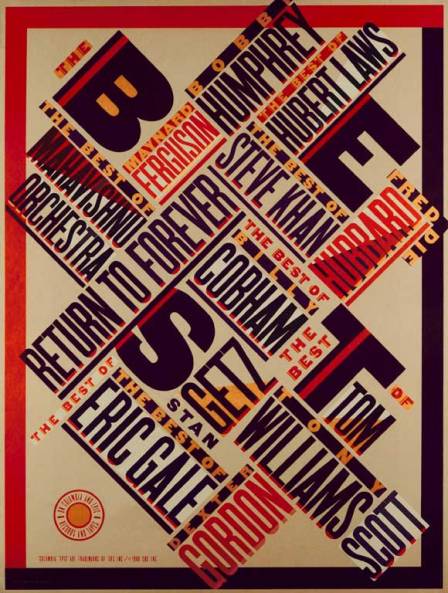
Russian constructivism propaganda posters have influenced and inspired the work of many of today’s Graphic designers. I found some examples of poster where the influence of the style can clearly be seen. The poster for CBS Recordas by Paula Scher (1938).
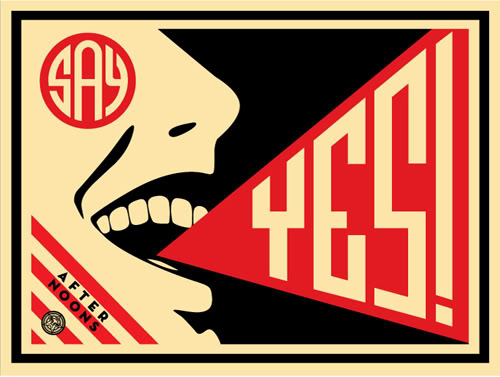
Say Yes!(2008) Shepard Fairey – inspired by a song of the same name by a band called the Afternoons. This poster was seen on the streets of LA shortly after the Obama posters.
References
The Art Story – Constructivism
The Design History – Constructivism
 Gurjeet e-Portfolio
Leave a comment